Material and Characteristics of The Distinction
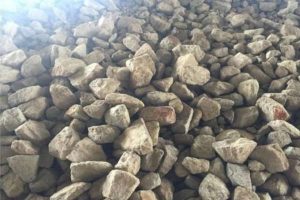
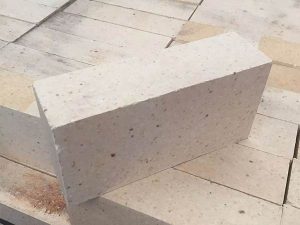
Low creep clay brick with bauxite clinker as the main raw material, integrato da speciali additivi, attraverso lo stampaggio ad alta pressione, e cottura ad alta temperatura, has the advantages of large heat storage capacity, piccolo tasso di scorrimento, eccetera.
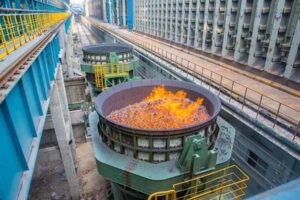
It is suitable for the supporting hot blast furnace of the small, medio, and large blast furnaces, and is mainly used in the lower and middle walls of heat storage, lower lattice bricks, supporting strings, e altre parti.
Low creep clay brick with coke stone, pietra rossa del pilastro, electrofusion mullite as the main raw material, and add a few additives. Using the three-stage batching, co-grinding fine powder, e altri processi, developed a porosity of 1 3 ~ 1 5 %, creep rate of 0 5 ~ 0 8%, 0 2Mpa load softening temperature of 1 4 72 ℃, resistenza alla compressione a temperatura ambiente di 1 0 0MPa hot blast furnace clay brick, the clay brick has good high-temperature volume stability, creep and wear resistance.

Low creep high alumina brick raw materials are II high alumina clinker (water absorption 4%), high purity silica, AL2O3 content greater than 99% of white corundum, and pure Suzhou clay. Low creep high alumina brick creep rate test method at present, the domestic creep rate test method, the calculation method is not uniform.
Commonly used methods are a 50h creep rate of less than 1% e 20%.
50h creep rate of less than 0.2% two kinds.
1. In 0.2MPa pressure, 1550 ℃, 50h cremdashep rate of less than 1% (high product). In 0.2MPa pressure, 1450 ℃, 50h creep rate of less than 1% (medio). At 0.2MPa pressure, 1350℃, 50h creep rate is less than 1% (low product).
2. At 0.2MPa pressure, 1550℃, 50h creep rate less than 0.2% (high grade). In 0. 2MPa pressure, 1450 ℃, 50h creep rate less than 0.2% (medium product), in 0.2MPa pressure, 1350 ℃, 50h creep rate less than 0.2% (low product); 0.2% is the difference between 50h and 20h creep rate less than 0.2%.
Now mostly use 50h creep rate less than 0.2%, to evaluate the low creep high alumina brick resistance to high temperature creep performance.

Low creep clay brick and low creep high alumina brick how distinguished?
The aluminum content, weight, and density of the two are not the same, the use temperature is not the same, and the price is also different.
What is the effect of low creep refractory bricks on the high-temperature performance of refractory materials?
Al2O3-SiO2 ha una buona resistenza al creep, che è determinato dalla microstruttura del materiale (cioè., il contenuto relativo di fasi cristalline e vetrose nel materiale, lo stato di distribuzione tra le fasi cristalline, and crystalline and glass phases).
Low creep brick type according to the microstructure characteristics, refractory brick factory will be low creep refractory brick into the following three basic types.
1. Code M mullite type refractory aggregate part (containing coarse particles and fine particles) is composed entirely of mullite. Mullite crystals are long columnar and needle-like, which constitute a special interlocking shelf structure with gaps filled by mullite; the matrix is distributed with fine in situ generated primary mullite and secondary generated mullite or certain additions.
2. Code M-C mullite-corundum type resistant material aggregate part (containing coarse or fine grains) is mullite, corindone. Interlocking columnar, needle-like mullite, the interstices of which are filled by corundum or mullite, the matrix part is in situ generated mullite or secondary mullite, sub-micro corundum or certain additives.
3. Corundum-mullite type corundum has short columnar, barrel-shaped crystals, which are not interspersed or interlaced in the structure of the resistant material. Between corundum crystals embedded with mullite interlaced columnar crystals, effectively prevent the corundum crystal slip, to obtain a stable structure.
The above types of low creep brick because the crystal structure is more stable, more conducive to the excellent performance of mullite or mullite and corundum, such as melting point: mullite 1870 ℃, corindone 2050 ℃, the two co-fusion temperature is higher, 1840 ℃, which is conducive to the improvement and improvement of the high-temperature performance of the material.
4. Types of low creep brick, crystalline phase content (mullite or mullite + corindone) as the main body, play a leading role, the glass phase content is the second, and the glass effect has little impact. Impurities on the impact of low creep refractory brick in the Al2O3-SiO2 system, impurities are mainly Fe2O3, TiO2, R2O, RO, eccetera.
What is red pillar brick?
In the industry standard (YB4032-91) and the Dutch type red pillar brick, there are clear requirements for the chemical composition. Parlando in generale, impurities in raw materials are closely related to the glass phase content.
Glass phase content increases with the impurity content, we hope that the impurity content is less, the corresponding glass phase content is also less, così che nella microstruttura del materiale resistente, la fase vetrosa in distribuzione isolata, non bagnare la fase cristallina, per il debole effetto della fase vetrosa (cioè., al confine del grano per la combinazione grano e grano, buona resistenza al creep).
Al contrario, impurità più contenuto di fase vetrosa è elevato, è destinato a bagnare la fase cristallina nella struttura di alto grado quando la fase vetrosa bagna completamente la fase cristallina, la fase vetrosa per formare una struttura a fase continua, influenzerà la velocità di scorrimento, facile produrre uno scorrimento maggiore a temperature più basse.
Nello studio della rodocrosite ad alto contenuto di TiO2, è stata raggiunta una conclusione preliminare: È possibile utilizzare un concentrato di rodocrosite ad alto contenuto di TiO2 proveniente da un determinato luogo.
La nostra ricerca è su un alto TiO2 rodocrosite concentrarsi come materiali principali o ausiliari, secondo il processo di produzione del mattone ad alto contenuto di allumina, quando è alta la rodocrosite di TiO2 nella giusta quantità, la giusta dimensione delle particelle, con altre materie prime, può essere fatto di temperatura di scorrimento a 1400 ℃, creep rate of 0.2% del prodotto.
La scelta delle materie prime e della granulometria, eccetera.
1. Materie prime Materiali del sistema Al2O3-SiO2, mullite, e il corindone sono materie prime importanti, e ci sono molte varietà di materie prime, prendiamo la mullite come esempio.
Come scegliere le materie prime?
Basato su: 1. Le caratteristiche di ogni materia prima. 2. Prezzo adeguato.
Parlando in generale, La mullite elettrofusa è sviluppata meglio della mullite sinterizzata, e lo scheletro formato dall'incastro dei cristalli di mullite è relativamente forte. Meno confini del grano, ridurre lo scorrimento dei bordi di grano, che favorisce la resistenza al creep. Quindi quando si producono mattoni a basso scorrimento, mullite elettrofusa. Mullite sinterizzate di ogni marca, alumina-based mullite quality is better than the corresponding bauxite-based mullite.
Compared with the corresponding brand of bauxite mullite, the former has more mullite content and better crystal development.
The quality of mullite obtained from the wet process is better than that of the corresponding brand of mullite from the semi-dry process because the material is fully homogenized. The choice of three stones, in the stereotyped products, is more choice of silica plus red pillar composite raw materials.
2. Particle size in the development of new products, should pay attention to the particle size distribution. Particle size distribution is different, affecting the performance of the product. The traditional coarse, medium and fine three-stage ingredients are no longer suitable. Nanotechnology has been applied to science and technology, life today, the refractory material ingredients should be selected multi-grade, as far as possible in line with the principle of close stacking, to obtain a dense body. The minimum requirements of the grading are coarse, medio, fine, and micro-fine 4 levels. Allo stesso tempo, the particle size of raw materials should be continuous, each particle size range is covered, as far as possible in line with the principle of compact stacking.
3. Temperature calcination temperature selection, so that the matrix and aggregate combined closely is very important. Three stone brick still has several characteristics to be further explored and utilized (such as thermal shock resistance, resistance to CO, electrical insulation, eccetera.).
Refractory material cracking, peeling, easy to wear how to do?
PER refrattario è impegnato nella produzione e R&D di materiali refrattari per molti anni e può risolvere tutti i tipi di problemi difficili del rivestimento del forno ad alta temperatura, e diamo il benvenuto a vecchi e nuovi amici per consultare e scambiare tecnologia.