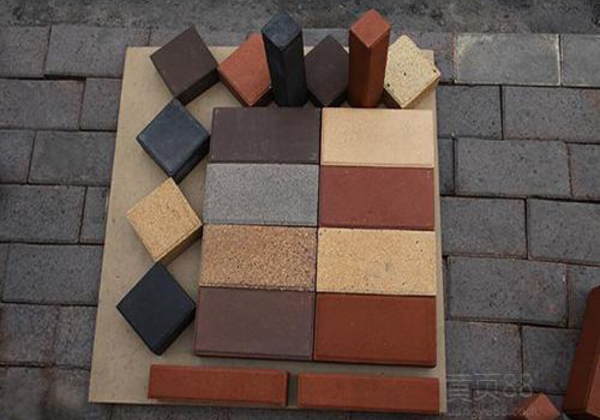
made high quality common burnt clay bricks. Large inventory. Top quality.
Gliniane cegły, Znane również jako spiekane cegły, to małe bloki stworzone przez człowieka do budowy. Cegły gliniane są wykonane z gliny (W tym Shalec, Oal gang, i inny proszek) jako główny surowiec, traktowane gliną, ukształtowany, wysuszony, and roasted, and are available in solid and hollow forms.
1.1 Common and superior clay bricks are mainly used in the metallurgical industry to produce shaped refractory materials.
Various specifications of bricks and unshaped refractory materials, the number of raw materials, stanowiących około 70% of all refractory materials. Refractory clay in the hard clay used to make blast furnace refractory materials, iron furnace, gorący wielki piec, steel barrel lining bricks, plug head bricks, high alumina clay used to make electric furnaces, blast furnaces with aluminum bricks, high alumina lining bricks and high alumina refractory clay, hard clay, and high alumina clay often in high temperature (1400-1800 ℃) calcined and matured material used.
1.2 Refractory clay in the grinding industry, przemysł chemiczny, and ceramic industry also has important uses, high alumina clay after in the electric arc furnace.
The high alumina clay is melted in the electric arc furnace to manufacture abrasive materials, of which electrofused corundum abrasive is the most widely used abrasive, rachunkowość 2/3 of all abrasive products, high alumina clay can be used to produce various aluminum compounds. Such as aluminum sulfate, aluminum hydroxide, aluminum chloride, potassium aluminum sulfate, and other chemical products. In the ceramic industry, hard clay and semi-hard clay can be used as raw materials for the manufacture of daily ceramics, architectural porcelain, and industrial porcelain.
1.3 Refractory clay in the building materials industry for the production of cement kilns and glass kilns
Cegły o wysokiej zawartości tlenku glinu, phosphate high alumina refractory bricks, high alumina fusion casting bricks, high alumina clay after calcination, and then mixed with limestone made of aluminum-containing cement, this cement can quickly set and corrosion resistance and heat resistance characteristics.
The advantages of clay brick:
China’s solid and hollow clay brick al2o3 content is generally more than 40%, and fe2o3 content is less than 2.0 ~ 2.5%. The clinker in the material is 65~85%, and the bonded clay is 35~15%. The crushed bonded clay and finely ground clinker are mixed and ground, and then prepared with granular clinker to form a semi-dry clay, formowanie pod wysokim ciśnieniem, and fired at about 1400℃, which has better performance. Clay bricks are weakly acidic at high temperatures and slightly less resistant to alkaline slag erosion but enhance with higher al2o3 content. Thermal stability is better than silica brick, magnesium brick (see magnesia brick), itp.
Refractory brick products. We use advanced production technology and high-quality raw materials to ensure our products are of the highest quality and meet the needs of our customers. With a commitment to customer satisfaction and quality, PER refractories are the go-to supplier for all your refractory brick needs.
Przede wszystkim, from the source gatekeeper, to jest, the raw material off, can not use raw materials and short firing time of raw materials, because the use of short calcination time of raw materials, will appear calcium point.
And the inherent quality of the affected phenomenon. Clay brick with low aluminum content, raw materials in the impurities, the purchase of raw materials should be allowed to calcify
W ten sposób, the inner quality of the clay bricks produced can be guaranteed.
Temperatura spiekania cegieł glinianych i jakość cegieł glinianych są ze sobą ściśle powiązane, jeśli temperatura spiekania jest niska. Zawartość żelaza nie może być w pełni spiekana. Reakcja zmniejszy ogniotrwałość cegieł glinianych, a powierzchnia cegły glinianej będzie miała dziury.
Spiekanie cegieł glinianych zależy od rozproszenia gliny i liczby materiałów topliwych, trudne do spiekania gliny nie można przekształcić w wysoką wytrzymałość i niską porowatość
Cegła z cegły. Przy wyborze surowców należy wybierać surowiec z cegły glinianej o mniejszej zawartości zanieczyszczeń, a ogniotrwałość nie powinna być niższa niż 1690 ℃; temperatura wypalania klinkieru glinianego jest lepsza niż temperatura wypalania cegły glinianej, dzięki czemu glina może osiągnąć całkowite spiekanie. Under-fired clinker also can not be used, it will shrink greatly during the firing process, causing clay brick cracks and strength decline.
The particle composition of the raw material in the clay brick composition has a great relationship to the strength and density of the clay brick. Raw material particles should be in line with the principle of large at both ends, small in the middle, and large, średni, and small particles with a reasonable proportion, to improve the quality of clay bricks. Clay brick particles in the crushing, must ensure that the granule formula is. The particle distribution is reasonable, and the mixing time cannot be too short. Only particle gradation reasonable, less raw material impurities, mixing time of 12 minutes or more, the production of clay bricks will be neat edges and corners, a powierzchnia jest gładka; naraz, można zagwarantować wewnętrzną jakość wytrzymałości na ściskanie i temperatury mięknienia obciążenia.
Cegła gliniana poprawiająca jakość produktu, od źródła surowców jest bardzo ważne, ale kluczowe znaczenie ma również formowanie pod wysokim ciśnieniem. Formowanie pod wysokim ciśnieniem cegieł glinianych ma dużą gęstość i wysoką wytrzymałość. Zewnętrzna wilgoć cegieł formowanych pod wysokim ciśnieniem szybko odparowuje, i przed wejściem do pieca tunelowego.
Przed wejściem do pieca tunelowego, jest wypalany w suszarce ze skrystalizowanej wody i wypalany w wysokich temperaturach przez ponad trzy dni, aby zagwarantować wskaźniki cegieł glinianych.
Wypalanie cegieł glinianych jest ostatnim procesem wytwarzania cegieł glinianych, cegła z kodem pieca samochodowego, aby pozostawić rozsądny kanał ogniowy, zły i kęs, kolumnę i kolumnę, aby pozostawić odpowiednią szczelinę, clay brick semi-finished products to be within the kiln wall should be kept at a distance, in the kiln to adjust the fire flow into the oxidation atmosphere sintering. Because the oxidation atmosphere fires out of the clay brick, uniform color. The load-softening temperature of clay bricks can only be guaranteed.
To improve the quality of clay bricks, we have to do a series of details from raw material purchase, to crushing, odlewanie, and firing to ensure the quality of clay bricks.
Od października, ceny tlenku glinu nadal rosły, and China's largest bauxite importer - a…
Pierwszy, Cegła o wysokiej zawartości tlenku glinu: The Leader In High Temperature Refractories As a leader in high-temperature…
The application of refractory bricks in the kiln immediately endangers the operation rate of the…
Analysis Of The Causes Of Common Quality Problems In Tunnel Kiln Construction And Measures To…
Corundum quality refractory castables are made from corundum to the new jade refractory insulation material…
Analiza surowców aluminiowo-krzemowych prof. Li Yong of the University of Science and…